vendredi 12 février 2016

Cheapest Electricity Providers

Electricity Providers

Prior to electricity deregulation in select areas of the United States, the electricity that powered homes and businesses seemed to come from one place: the utility company. Of course, it’s always been more complex than that! With electricity deregulation continuing to expand, residents and businesses should make sure to understand where their electricity comes from, how it’s delivered, and how the cost is divided.

Electric Service Basics

Electric service is made up of three separate parts, collectively referred to as the “electrical grid”:
  • Generation – Generation is the production of electricity by power plants
  • Transmission– Transmission is the movement of electricity from the point of origin to a distribution system
  • Distribution– Distribution is the delivery of electricity to customers’ homes or businesses by utility companies
Prior to electricity deregulation, power was supplied by regional utility monopolies that could own and operate all three parts of electric service. In response to a growing demand for competition in the industry, spurred by the success of deregulation in the airline and telecommunications industries, Congress passed the National Energy Policy Act in 1992 which created wholesale electric markets that allow for open access of generation.
Similarly, the 1996 Order 888 from the Federal Energy Regulatory Commission required utilities to open their transmission lines to competitors. This opened the door for states to pursue deregulation, and nearly half have done so.

Electric Service After Deregulation:
Retail Electricity Providers

Going back to the three components of the electric grid, customers in deregulated areas can choose who supplies their electricity. This is different from the distribution, transmission, and generation of electricity.
Generally, the generation of electricity is unrelated to anything on your bill. Power plant companies generate electricity and sell it to utilities as well as retail electricity providers in deregulated areas. The electricity is then resold to you, the customer. Transmission and distribution is taken care of and charged to you by your utility, regardless of what company supplies the electricity. These charges are separate from the supply portion of your bill.
Deregulation allows you to choose from a variety of retail electricity providers, much like you’d shop around for a telephone or internet provider. When choosing an electricity provider, the process is completely hassle-free. You will not have any service interruptions, your electricity will still be just as reliable as before, and your monthly bill will continue to arrive. If your power goes out, your utility will still be the one to call. The only change will be under the supply portion of you bill. There, you will see the provider you selected and the rate you approved.
In deregulated areas of the country, competing retail electricity providers offer a range of packages for residential consumers. Plans may have fixed- or variable-rates, may have terms that last from one month to two years, and may include partial or 100% renewable electricity.
Deregulated areas can be found in all or parts of Illinois, Texas, Ohio, Pennsylvania, New York, New Jersey, and Maryland as well as several other states in New England.

 to find cheapest Electricity Providers in USA

this is some websites

www.uswitch.com

www.comparethemarket.com/energy/

The Electricity of Tomorrow


The electric system of tomorrow

Snapshot from the future

http://gelookahead.economist.com/wp-content/uploads/2015/03/071613info.jpg
BY CHRIS DEMARCO, GERALD T. HEYDT, SHMUEL OREN, Power Systems Engineering Research Center (PSERC)
THE GRAND CHALLENGE
Design an electric power system that takes full advantage of the convergence of energy, communications, sensing, and computing technologies in a cyber-physical system that enables society to reach its diverse energy objectives, such as 50 percent renewables or 80 percent reduction of carbon dioxide (CO2) emissions by 2050. Part of the challenge is to make the transition to high levels of renewable resources transparent to users of electric energy where this transparency relates to both reliability of the electric supply as well as its economy.
Power and energy engineering in its first century of existence has largely been concerned with alleviating humankind of its burdens. In the latter portion of the previous century, information collection, transfer, and processing have augmented the role of energy and power utilization. Not only is technology changing, but also societal expectations of the electric power system are changing, particularly as environmental and economic concerns grow.

Electrical Transformers

Definition of Transformer

A transformer is a static machine used for transforming power from one circuit to another without changing frequency. This is a very basic definition of transformer.

History of Transformer

The history of transformer was commenced in the year 1880. In the year 1950, 400KV electrical power transformer was introduced in high voltage electrical power system. In the early 1970s, unit rating as large as 1100MVA was produced and 800KV and even higher KV class transformers were manufactured in year of 1980.

Electrical Transformers Explained

Electrical transformers are used to "transform" voltage from one level to another, usually from a higher voltage to a lower voltage. They do this by applying the principle of magnetic induction between coils to convert voltage and/or current levels.
In this way, electrical transformers are a passive device which transforms alternating current (otherwise known as "AC") electric energy from one circuit into another through electromagnetic induction. An electrical transformer normally consists of a ferromagnetic core and two or more coils called "windings". A changing current in the primary winding creates an alternating magnetic field in the core. In turn, the core multiplies this field and couples the most of the flux through the secondary tranformer windings. This in turn induces alternating voltage (or emf) in each of the secondary coils.
Electrical transformers can be configured as either a single-phase or a three-phase configuration. There are several important specifications to specify when searching for electrical transformers. These include: maximum secondary voltage rating, maximum secondary current rating, maximum power rating, and output type. An electrical transformer may provide more than one secondary voltage value. The Rated Power is the sum of the VA (Volts x Amps) for all of the secondary windings. Output choices include AC or DC. For Alternating Current waveform output, voltage the values are typically given in RMS values. Consult manufacturer for waveform options. For direct current secondary voltage output, consult manufacturer for type of rectification.
Cores can be constructed as either a toroidal or laminated. Toroidal units typically have copper wire wrapped around a cylindrical core so the magnetic flux, which occurs within the coil, doesn't leak out, the coil efficiency is good, and the magnetic flux has little influence on other components. Laminated refers to the laminated-steel cores. These steel laminations are insulated with a nonconducting material, such as varnish, and then formed into a core that reduce electrical losses. There are many types. These include autotransformer, control, current, distribution, general-purpose, instrument, isolation, potential (voltage), power, step-up, and step-down. Mountings include chassis mount, dish or disk mount, enclosure or free standing, h frame, and PCB mount.


who invented electricity ?

Electricity is a form of energy and it occurs in nature, so it was not “invented.” As to who discovered it, many misconceptions abound. Some give credit to Benjamin Franklin for discovering electricity, but his experiments only helped establish the connection between lightning and electricity, nothing more.
The truth about the discovery of electricity is a bit more complex than a man flying his kite. It actually goes back more than two thousand years.

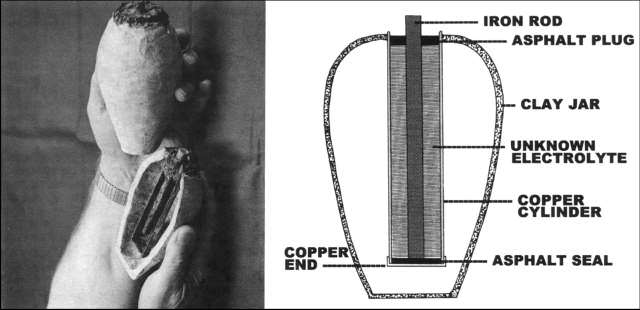
In about 600 BC, the Ancient Greeks discovered that rubbing fur on amber (fossilized tree resin) caused an attraction between the two – and so what the Greeks discovered was actually static electricity. Additionally, researchers and archeologists in the 1930’s discovered pots with sheets of copper inside that they believe may have been ancient batteries meant to produce light at ancient Roman sites. Similar devices were found in archeological digs near Baghdad meaning ancient Persians may have also used an early form of batteries.
A replica and diagram of one of the ancient electric cells (batteries) found near Bagdad.
But by the 17th century, many electricity-related discoveries had been made, such as the invention of an early electrostatic generator, the differentiation between positive and negative currents, and the classification of materials as conductors or insulators.
In the year 1600, English physician William Gilbert used the Latin word “electricus” to describe the force that certain substances exert when rubbed against each other. A few years later another English scientist, Thomas Browne, wrote several books and he used the word “electricity” to describe his investigations based on Gilbert’s work.
Who Discovered Electricity
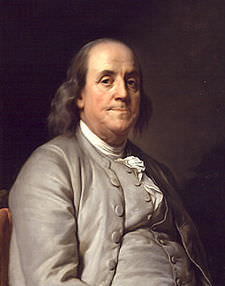
Benjamin Franklin. Image Source: Wikipedia
In 1752, Ben Franklin conducted his experiment with a kite, a key, and a storm. This simply proved that lightning and tiny electric sparks were the same thing.
Italian physicist Alessandro Volta discovered that particular chemical reactions could produce electricity, and in 1800 he constructed the voltaic pile (an early electric battery) that produced a steady electric current, and so he was the first person to create a steady flow of electrical charge. Volta also created the first transmission of electricity by linking positively-charged and negatively-charged connectors and driving an electrical charge, or voltage, through them.
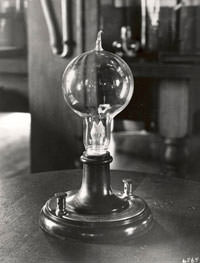
In 1831 electricity became viable for use in technology when Michael Faraday created the electric dynamo (a crude power generator), which solved the problem of generating electric current in an ongoing and practical way. Faraday’s rather crude invention used a magnet that was moved inside a coil of copper wire, creating a tiny electric current that flowed through the wire. This opened the door to American Thomas Edison and British scientist Joseph Swan who each invented the incandescent filament light bulb in their respective countries in about 1878. Previously, light bulbs had been invented by others, but the incandescent bulb was the first practical bulb that would light for hours on end.
Replica of Thomas Edison's first lightbulb. Credit: National Park Service.
Replica of Thomas Edison’s first lightbulb. Credit: National Park Service.
Swan and Edison later set up a joint company to produce the first practical filament lamp, and Edison used his direct-current system (DC) to provide power to illuminate the first New York electric street lamps in September 1882.
Later in the 1800’s and early 1900’s Serbian American engineer, inventor, and all around electrical wizard Nikola Tesla became an important contributor to the birth of commercial electricity. He worked with Edison and later had many revolutionary developments in electromagnetism, and had competing patents with Marconi for the invention of radio. He is well known for his work with alternating current (AC), AC motors, and the polyphase distribution system.
Later, American inventor and industrialist George Westinghouse purchased and developed Tesla’s patented motor for generating alternating current, and the work of Westinghouse, Tesla and others gradually convinced American society that the future of electricity lay with AC rather than DC.
Others who worked to bring the use of electricity to where it is today include Scottish inventor James Watt, Andre Ampere, a French mathematician, and German mathematician and physicist George Ohm.
And so, it was not just one person who discovered electricity. While the concept of electricity was known for thousands of years, when it came time to develop it commercially and scientifically, there were several great minds working on the problem at the same time.
We have written many articles about electricity for Universe Today. Here’s a separate article about static electricity, and here’s an interesting story about how astronomy was part of how electricity was brought to the World’s Fair in Chicago in 1933.
For more detailed information about the discovery of electricity, see our sources, below.
We’ve also recorded an entire episode of Astronomy Cast all about Electromagnetism. Listen here, Episode 103: Electromagnetism.

From the writings of Thales of Miletus it appears that Westerners knew as long ago as 600 B.C. that amber becomes charged by rubbing. There was little real progress until the English scientist William Gilbert in 1600 described the electrification of many substances and coined the term electricity from the Greek word for amber. As a result, Gilbert is called the father of modern electricity. In 1660 Otto von Guericke invented a crude machine for producing static electricity. It was a ball of sulfur, rotated by a crank with one hand and rubbed with the other. Successors, such as Francis Hauksbee, made improvements that provided experimenters with a ready source of static electricity. Today's highly developed descendant of these early machines is the Van de Graaf generator, which is sometimes used as a particle accelerator. Robert Boyle realized that attraction and repulsion were mutual and that electric force was transmitted through a vacuum. Stephen Gray distinguished between conductors and nonconductors. C. F. Du Fay recognized two kinds of electricity, which Benjamin Franklin and Ebenezer Kinnersley of Philadelphia later named positive and negative.
Progress quickened after the Leyden jar was invented in 1745 by Pieter van Musschenbroek. The Leyden jar stored static electricity, which could be discharged all at once. In 1747 William Watson discharged a Leyden jar through a circuit, and comprehension of the current and circuit started a new field of experimentation. Henry Cavendish, by measuring the conductivity of materials (he compared the simultaneous shocks he received by discharging Leyden jars through the materials), and Charles A. Coulomb, by expressing mathematically the attraction of electrified bodies, began the quantitative study of electricity.
A new interest in current began with the invention of the battery. Luigi Galvani had noticed (1786) that a discharge of static electricity made a frog's leg jerk. Consequent experimentation produced what was a simple electron cell using the fluids of the leg as an electrolyte and the muscle as a circuit and indicator. Galvani thought the leg supplied electricity, but Alessandro Volta thought otherwise, and he built the voltaic pile, an early type of battery, as proof. Continuous current from batteries smoothed the way for the discovery of G. S. Ohm's law, relating current, voltage (electromotive force), and resistance, and of J. P. Joule's law of electrical heating. Ohm's law and the rules discovered later by G. R. Kirchhoff regarding the sum of the currents and the sum of the voltages in a circuit are the basic means of making circuit calculations.
In 1819 Hans Christian Oersted discovered that a magnetic field surrounds a current-carrying wire. Within two years André Marie Ampère had put several electromagnetic laws into mathematical form, D. F. Arago had invented the electromagnet, and Michael Faraday had devised a crude form of electric motor. Practical application of a motor had to wait 10 years, however, until Faraday (and earlier, independently, Joseph Henry) invented the electric generator with which to power the motor. A year after Faraday's laboratory approximation of the generator, Hippolyte Pixii constructed a hand-driven model. From then on engineers took over from the scientists, and a slow development followed; the first power stations were built 50 years later.
In 1873 James Clerk Maxwell had started a different path of development with equations that described the electromagnetic field, and he predicted the existence of electromagnetic waves traveling with the speed of light. Heinrich R. Hertz confirmed this prediction experimentally, and Marconi first made use of these waves in developing radio (1895). John Ambrose Fleming invented (1904) the diode rectifier vacuum tube as a detector for the Marconi radio. Three years later Lee De Forest made the diode into an amplifier by adding a third electrode, and electronics had begun. Theoretical understanding became more complete in 1897 with the discovery of the electron by J. J. Thomson. In 1910–11 Ernest R. Rutherford and his assistants learned the distribution of charge within the atom. Robert Millikan measured the charge on a single electron by 1913.

Sources of Electricity

Sources of Electricity

How We Make Electricity

Electrical energy is produced from many different energy sources. Some of these energy sources are renewable and others are non-renewable.
Most of the electricity used in Australia is made from power plants that burn fossil fuels to create steam. The main type of fuel used is coal, because it allows large amounts of electricity to be produced in one place.
Coal currently accounts for over 70 per cent of Australia’s electric power. Electricity is generated through coal-fired power stations. Coal is a non-renewable source which means it will eventually run out. It is important we preserve our coal resources and look for more environmentally friendly ways of producing electricity.
There are other ways of generating electricity by using natural resources that can be replaced or renewed without harming the environment or contributing to the greenhouse effect. 
Presently 89 per cent of Australia’s electricity is generated from burning fossil fuels, 74 per cent from coal and 15 per cent from natural gas. Renewable energy is used to generate 11 per cent of electricity. Of those renewable energy sources hydropower is the biggest contributor contributing around 6 per cent of total electricity. The remaining 5 per cent comes from a mix of sources including wind, bioenergy and rooftop solar.
Gen Mix Website 2014
Explore the current mix of energy sources converted into electricity here on the Origin Energy website.
Of course most people would like to see a more environmentally friendly mix of energy sources transformed into electrical energy but at present fossil fuel sources are the mainstay of electricity in Australia. The mix of energy sources to convert into electrical energy is changing.


sources


What Is Electricity?


Electricity is the set of physical phenomena associated with the presence and flow of electric charge. Electricity gives a wide variety of well-known effects, such as lightning, static electricity, electromagnetic induction and electric current. In addition, electricity permits the creation and reception of electromagnetic radiation such as radio waves.
Multiple lightning strikes on a city at night

Electricity figures everywhere in our lives. Electricity lights up our homes, cooks our food, powers our computers, television sets, and other electronic devices. Electricity from batteries keeps our cars running and makes our flashlights shine in the dark.
Here's something you can do to see the importance of electricity. Take a walk through your school, house or apartment and write down all the different appliances, devices and machines that use electricity. You'll be amazed at how many things we use each and every day that depend on electricity.
But what is electricity? Where does it come from? How does it work? Before we understand all that, we need to know a little bit about atoms and their structure.
All matter is made up of atoms, and atoms are made up of smaller particles. The three main particles making up an atom are the proton, the neutron and the electron.
Electrons spin around the center, or nucleus, of atoms, in the same way the moon spins around the earth. The nucleus is made up of neutrons and protons.
Electrons contain a negative charge, protons a positive charge. Neutrons are neutral – they have neither a positive nor a negative charge.
There are many different kinds of atoms, one for each type of element. An atom is a single part that makes up an element. There are 118 different known elements that make up every thing! Some elements like oxygen we breathe are essential to life.

Each atom has a specific number of electrons, protons and neutrons. But no matter how many particles an atom has, the number of electrons usually needs to be the same as the number of protons. If the numbers are the same, the atom is called balanced, and it is very stable.
So, if an atom had six protons, it should also have six electrons. The element with six protons and six electrons is called carbon. Carbon is found in abundance in the sun, stars, comets, atmospheres of most planets, and the food we eat. Coal is made of carbon; so are diamonds.
Some kinds of atoms have loosely attached electrons. An atom that loses electrons has more protons than electrons and is positively charged. An atom that gains electrons has more negative particles and is negatively charge. A "charged" atom is called an "ion."
Electrons can be made to move from one atom to another. When those electrons move between the atoms, a current of electricity is created. The electrons move from one atom to another in a "flow." One electron is attached and another electron is lost.
This chain is similar to the fire fighter's bucket brigades in olden times. But instead of passing one bucket from the start of the line of people to the other end, each person would have a bucket of water to pour from one bucket to another. The result was a lot of spilled water and not enough water to douse the fire. It is a situation that's very similar to electricity passing along a wire and a circuit. The charge is passed from atom to atom when electricity is "passed."
Scientists and engineers have learned many ways to move electrons off of atoms. That means that when you add up the electrons and protons, you would wind up with one more proton instead of being balanced.
Since all atoms want to be balanced, the atom that has been "unbalanced" will look for a free electron to fill the place of the missing one. We say that this unbalanced atom has a "positive charge" (+) because it has too many protons.
Since it got kicked off, the free electron moves around waiting for an unbalanced atom to give it a home. The free electron charge is negative, and has no proton to balance it out, so we say that it has a "negative charge" (-).
So what do positive and negative charges have to do with electricity?
Scientists and engineers have found several ways to create large numbers of positive atoms and free negative electrons. Since positive atoms want negative electrons so they can be balanced, they have a strong attraction for the electrons. The electrons also want to be part of a balanced atom, so they have a strong attraction to the positive atoms. So, the positive attracts the negative to balance out.
The more positive atoms or negative electrons you have, the stronger the attraction for the other. Since we have both positive and negative charged groups attracted to each other, we call the total attraction "charge."
Energy also can be measured in joules. Joules sounds exactly like the word jewels, as in diamonds and emeralds. A thousand joules is equal to a British thermal unit.
When electrons move among the atoms of matter, a current of electricity is created. This is what happens in a piece of wire. The electrons are passed from atom to atom, creating an electrical current from one end to other, just like in the picture.
Electricity is conducted through some things better than others do. Its resistance measures how well something conducts electricity. Some things hold their electrons very tightly. Electrons do not move through them very well. These things are called insulators. Rubber, plastic, cloth, glass and dry air are good insulators and have very high resistance.
Other materials have some loosely held electrons, which move through them very easily. These are called conductors. Most metals – like copper, aluminum or steel – are good conductors.